She used to ask questions.
That’s what you remember most, actually. The way she’d linger after youth group wanting to talk about something the speaker said. The sharp observations she’d text you at 11pm because her brain wouldn’t let go of a theological tension she’d spotted. The way she’d push back (respectfully, but firmly) when something didn’t sit right.
And then she stopped.
Not dramatically. No confrontation, no tearful exit. She went quiet. Started sitting in the back row. Became really good at nodding and smiling without engaging. And when you finally asked if something was wrong, she said something you didn’t know how to process:
“I just don’t know if there’s room for me here anymore. It feels like I have to choose between my faith and being able to think for myself.”
If you’ve been paying attention to the young believers in your life (your kids, your students, the teenagers you mentor), you’ve probably noticed this pattern. The ones who were once spiritually curious becoming spiritually distant. The sharp questions drying up. The slow fade from engagement to polite attendance to absence.
And what you might be missing: it’s not that they’ve stopped believing in Jesus. It’s that faith has started to feel like a foxhole.
When Church Becomes a Battlefield
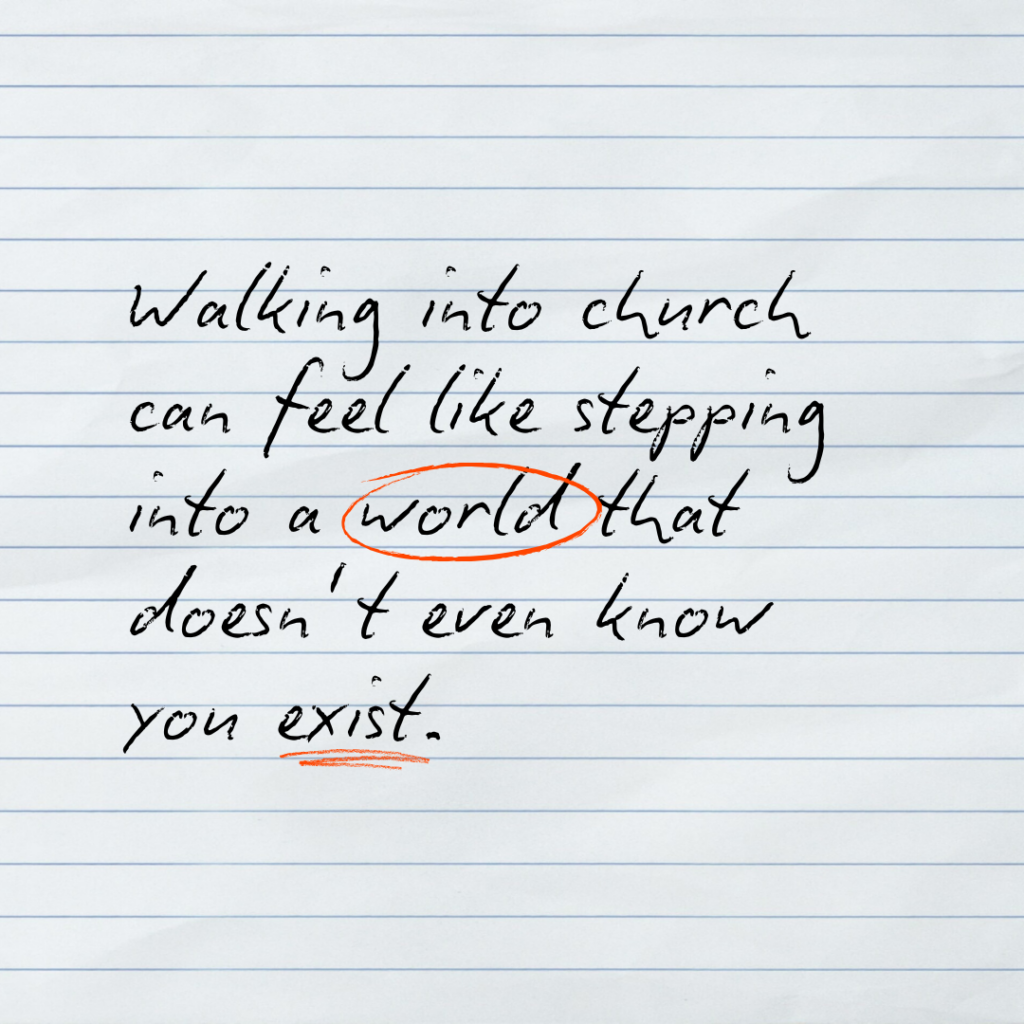
What I keep hearing from young Christians who are pulling away: church doesn’t feel like a refuge anymore. It feels like a place where one wrong question, one uncertain opinion, one “wait, can we talk about this?” could get them labeled and pushed out.
And I’m not talking about questions like “Is Jesus really God?” (though those matter too). I’m talking about questions like, “Can Christians disagree on immigration policy?” or “Does being pro-life have to mean I vote this specific way?” or “Why does it feel like loving my neighbor and being politically acceptable in my church are two different things?”
These aren’t rebellious questions. They’re sincere ones. But somewhere along the way, a lot of young believers learned (through observation, through experience, through what got celebrated and what got side-eyed) that certain questions aren’t safe to ask out loud.
Research confirms this isn’t imagined. Over a third of young Christians report that they don’t feel they can ask their most pressing life questions or express doubts within the church. Think about that. These aren’t outsiders skeptical of faith. These are young people who want to follow Jesus but have learned that some questions come with a price tag.
The result? Protective withdrawal. They stop asking not because they’ve stopped wondering, but because they’re tired. Some are afraid of being labeled. Others have already been dismissed and don’t have energy for another round. Some don’t want to cause conflict with people they love.
Their silence isn’t apathy. It’s self-preservation.
The silence looks the same from the outside, but the reasons underneath are different. And if you want to reach them, you need to know which kind of tired you’re dealing with.
Not every young person is experiencing this. Some are thriving in communities that make space for questions. But enough are struggling that the pattern is worth noticing.
The Fusion Problem
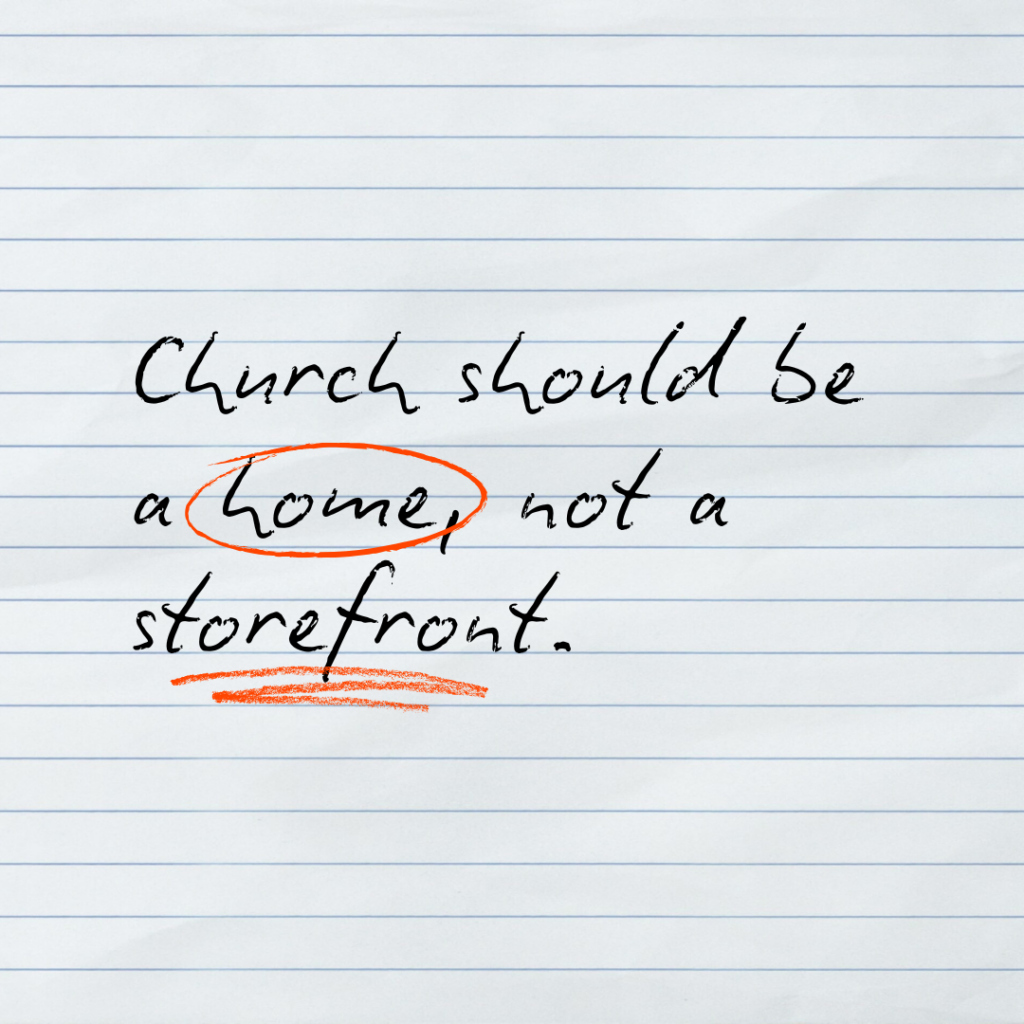
What I’ve come to understand (and I had to learn this the hard way, through my own seasons of needing space to process without being labeled): somewhere in the past few decades, faith identity and political identity got welded together so tightly that many young people can’t figure out where one ends and the other begins.
And honestly? That fusion happened slowly enough that a lot of us didn’t notice.
It started with legitimate concerns. Faith should shape how we think about ethics, justice, human dignity. The Bible has things to say about how we treat the vulnerable, how we steward creation, how we pursue righteousness in our communities. Theology touching politics isn’t the problem.
The problem is when political positions become markers of “real” Christianity.
When a young person can’t disagree with a particular policy position without being told (or sensing, which is almost worse) that their salvation or spiritual maturity is now in question… that’s not formation. That’s conformity masquerading as faith.
And the part that’s hard to hear: they’re not imagining it. The environment that makes questions feel unsafe? We built that. Not maliciously, usually. But the young person who learned to scan every conversation for landmines didn’t learn that from nowhere. They learned it from watching what happened to people who landed wrong on certain issues. From noticing which opinions got warm nods and which got concerned silences. From absorbing, over years, what was acceptable to think out loud.
(If you’re reading this thinking, “But I’ve always welcomed questions”… you might be right. This isn’t about assigning blame. It’s about recognizing that even well-intentioned environments can feel unsafe to someone who’s been burned elsewhere or who’s watching what happens to others. You might not have created the wound. But you can still be part of the healing.)
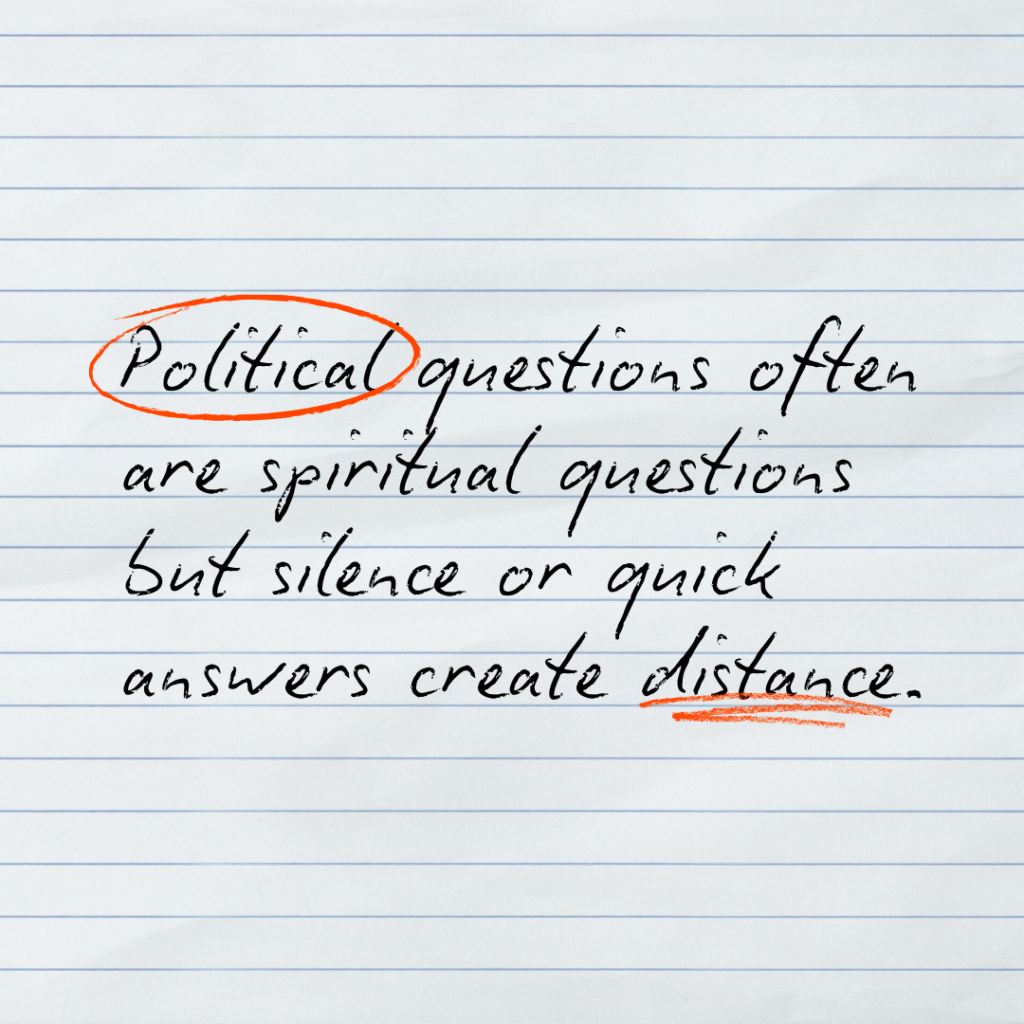
What we might be missing: for many young believers, political questions are spiritual questions. They’re asking, “What does it look like to love my neighbor in a polarized world?” and “How do I honor God when I’m being pressured by both sides?” and “Is there a way to be faithful without becoming a political mascot?”
Those are profound questions. Questions that deserve thoughtful engagement, not dismissal.
But when they bring those questions to church, what do they often get? Either silence (which signals the church doesn’t care about what they’re processing) or a political answer dressed up in spiritual language (which signals they’re being told what to think rather than being taught how to think).
Neither creates disciples. Both create distance.
The Exhaustion Underneath
I want you to understand something about the young people who are pulling away from faith because it seems too politically charged. They’re not lazy. They’re not “influenced by secular culture.” They’re not looking for an excuse to leave.
They’re exhausted.
Worn out from having to scan every conversation for landmines. Depleted from the hypervigilance of wondering which opinions are “safe” and which will get them exiled. Tired of watching people they love get reduced to political caricatures. Drained from being told (explicitly or implicitly) that questioning a political position is the same as questioning God.
That exhaustion isn’t rebellion. It’s the weight of carrying something that was never supposed to be fused to their faith in the first place.
I know this weariness personally. There was a season in my own journey where I couldn’t ask hard questions without immediately being categorized. Where expressing uncertainty felt like confessing sin. Where the space between “I’m thinking about this” and “I’ve landed somewhere heretical” felt impossibly thin. I needed room to process… and when I didn’t find it, I drifted.
Not because I wanted to leave Jesus. Because faith had started to feel like a performance I couldn’t sustain.
And if you’re walking alongside young people in their faith, you need to know: they can tell when a conversation feels more like a test than an invitation. Even if that’s not your intent, that’s sometimes how it lands. They notice when the sermons get passionate about political issues but go quiet on the verses about loving enemies and seeking peace.
They notice. And they’re tired.
But What About Standing for Truth?
I can hear the objection forming. Maybe you’re thinking: “Aren’t we supposed to stand for truth? Isn’t creating space for uncertainty just… compromise?”
The distinction I’m learning to make, there’s a difference between convictions about the gospel and convictions about how the gospel applies to every specific political question.
The deity of Christ isn’t negotiable. The resurrection isn’t a matter of personal interpretation. Who you voted for in the last election is not the same category of truth.
Political questions often are spiritual questions. But “spiritual” doesn’t mean “already settled.” It means “worth bringing to Scripture together rather than demanding agreement upfront.”
You can have strong convictions and still make room for someone who’s working through theirs. In fact, Paul seems to think that’s exactly what mature faith looks like. There’s this section in Romans 14 about “disputable matters” (things Christians can legitimately disagree about) that most young believers have never been taught. Paul writes about welcoming believers “who are weak in faith” and not arguing with them about what they think is right or wrong (Romans 14:1, NLT). He asks a devastating question: “Who are you to condemn someone else’s servants? Their own master will judge whether they stand or fall” (Romans 14:4, NLT).
Their own master will judge. Not you. Not your church. Not your political party.
I wonder what would shift if we spent more time exploring that passage with the young people in our care. If we taught them that Christian disagreement has biblical precedent. That unity in Christ doesn’t require uniformity on every issue. That there’s space in the body for different convictions on secondary matters.
A Way Through: Seek First
So what do we do? How do we walk alongside young people through the political noise without demanding they adopt our exact positions or pretend the noise doesn’t exist?
Jesus gave us the framework. It’s one verse, and it cuts through everything: “Seek the Kingdom of God above all else, and live righteously, and he will give you everything you need” (Matthew 6:33, NLT).
Seek first the kingdom.
Not seek first the political party that claims to represent God’s values. Not seek first the winning side of the culture war. Not seek first the theological tribe that will accept you. The kingdom. God’s agenda. Christ’s priorities.
And in practice with the young people you’re walking alongside, that looks like:
Creating space for them to bring political questions as spiritual questions, bringing their uncertainty to Scripture rather than having their uncertainty shamed by it. Modeling how to hold strong convictions without making those convictions the test of someone’s faith. Being the kind of presence where they can say “I don’t know what I think about this yet” without that admission becoming a mark against their spiritual maturity.
Practically speaking:
Your teenager says something at dinner like, “I don’t think I can vote for either party because they both feel wrong to me.” A politically charged response sounds like: “Well, there’s a clear biblical choice if you understand the issues.” A kingdom-first response sounds like: “That tension is real. What feels wrong about each of them to you?” And then you listen. Not to correct. To understand what they’re processing underneath the political question.
Or they come home from youth group and say, “My friend got shut down for asking why the church doesn’t talk about climate change.” A politically charged response is to explain why that question was inappropriate. A kingdom-first response is: “That sounds frustrating. What do you think we should be talking about?”
It means asking them what they’re worried about underneath the political question. (Spoiler: it’s usually not about the policy. It’s about belonging. It’s about whether they’ll still be loved if they land somewhere different. It’s about whether Jesus has room for their honest confusion.)
It means teaching them what it looks like to “seek first the kingdom” in a world that keeps demanding they seek first something else.
What This Requires of You
I know this is harder than giving them the “right” answers. Trust me, I understand the pull to want to spare them from error, to hand them your conclusions so they don’t have to struggle through to their own.
But faith that gets handed to someone without struggle doesn’t survive contact with a complex world. They need the process. They need permission to think. They need you to trust that the Holy Spirit is capable of leading them into truth even through their uncertainty.
This might mean examining your own fusion first. Ask yourself: When was the last time I disagreed with my political “side” on something because Scripture led me elsewhere? When was the last time I held a conviction loosely enough to listen to someone who saw it differently? If the answer is “I can’t remember,” you might be more fused than you think. And young people can sense that. They can tell the difference between someone who’s seeking the kingdom first and someone who’s seeking the kingdom filtered through a political lens.
Your job isn’t to pre-digest every political question for them. Your job is to show them how to bring those questions to Scripture, how to hold convictions with humility, how to disagree with someone (even you) without that disagreement fracturing the relationship.
That might be where I’d start, actually. Not with trying to answer every political question they have, but with showing them that the early church was diverse too, and Paul’s answer wasn’t “get everyone to agree.” It was “make room for each other while you figure it out.”
What I’m Still Figuring Out
I’d love to tell you I’ve figured out the perfect balance between conviction and humility, between speaking truth and making space for process. But that would be a lie.
What I can tell you is that the young people I know who’ve stayed engaged with faith (even through deep political uncertainty) have one thing in common: they had at least one person who let them ask the hard questions without treating those questions as threats.
One parent who said, “I don’t know either, but let’s look at Scripture together.”
One mentor who said, “I disagree with you on this, and I’m still for you.”
One leader who said, “Your doubts don’t scare me. God can handle them.”
That’s what you can be for the young believers in your life. Not the one with all the answers. The one who makes space for the questions to be asked in the first place.
Because the goal isn’t keeping them politically aligned. The goal is helping them seek first the kingdom… and trusting that a young person who learns to do that will find their way to faithful living, even if their conclusions don’t perfectly mirror yours.
The girl who went quiet? She might come back. Not because you convinced her of the “right” positions, but because you convinced her there’s room for her at the table while she figures it out.
That’s the invitation Jesus keeps extending, anyway. Not “have it all figured out first.” Come. Seek. Ask. Work through it.
And find out that the Kingdom is bigger than any foxhole we’ve accidentally built around it.
This week, try something small. Ask one young person in your life: “What’s a question you’ve been afraid to ask out loud?” Then listen. Don’t correct. Don’t answer. Don’t explain why the question is misguided. Let them know the question is welcome.
That might be enough to start.